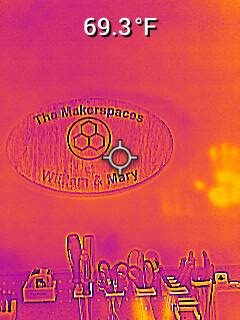
One of the many goals of the Makerspaces at William & Mary is to help faculty, staff & students expand and develop their research paths. To this end we have already helped many faculty and staff prototype initial equipment, use our existing equipment for initial data collection, or borrow equipment for their own labs. For instance, did you know that we have a Flir handheld infrared imaging camera that faculty & staff (and students with an advisors’ permission) can reserve for use? Let us know how we can help.
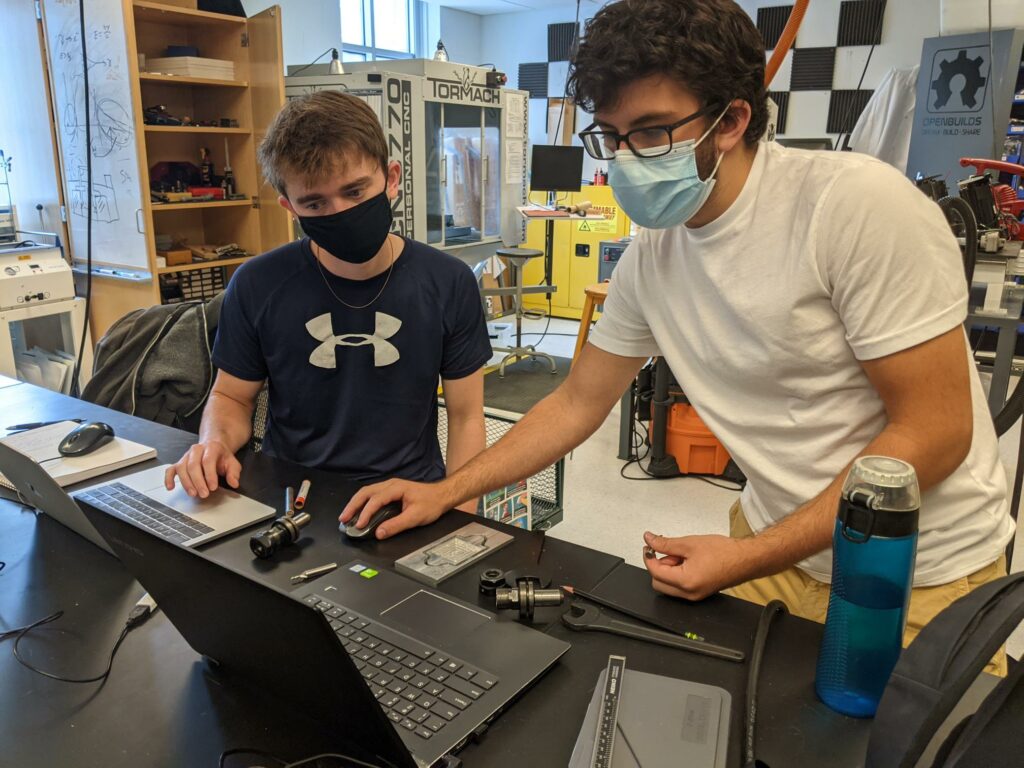
Don’t be afraid to ask MSEs for help with school work! Our MSEs study a range of fields including Physics, Chemistry, Geology, Computer Science, and even Studio Art. Working together to solve problems is what the Makserspace is all about and helps contribute to our collaborative workspace.
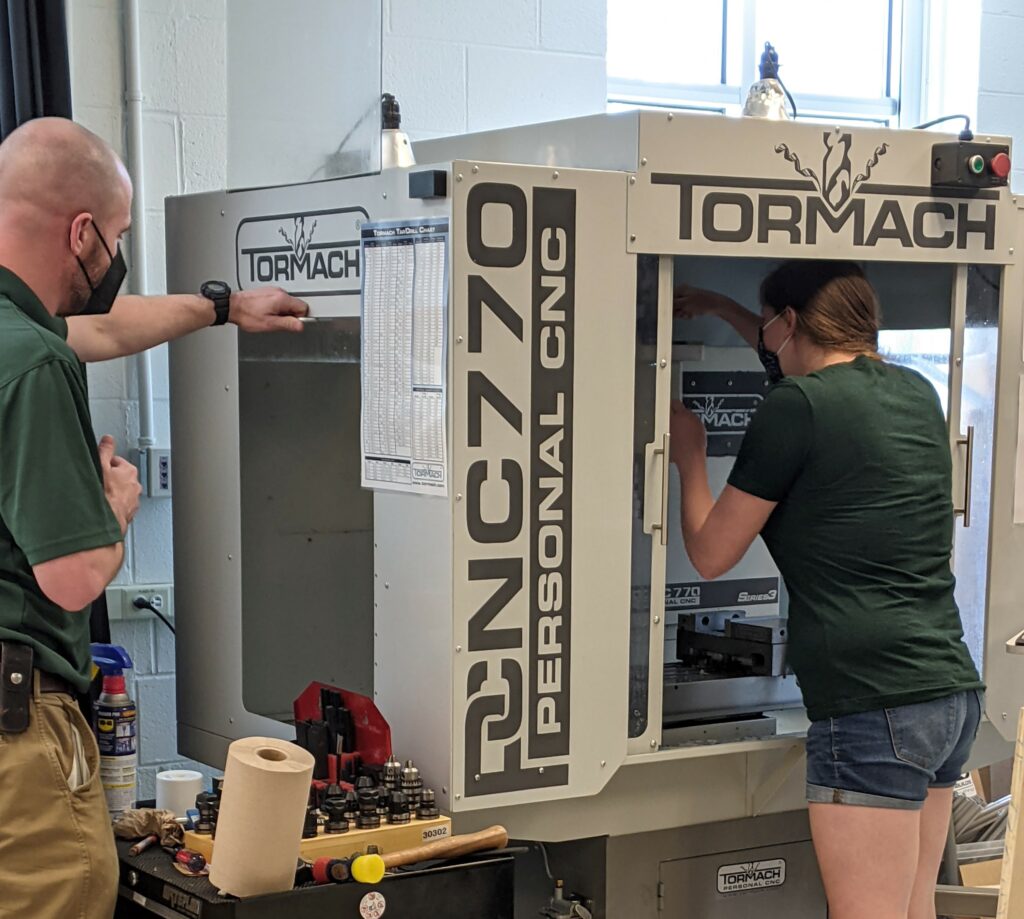
We’re back at it again! Every Friday from 3-5pm come join us in the Makerspace Engineering Center in Small Hall to learn, practice, and talk about milling, routing, and lathes!
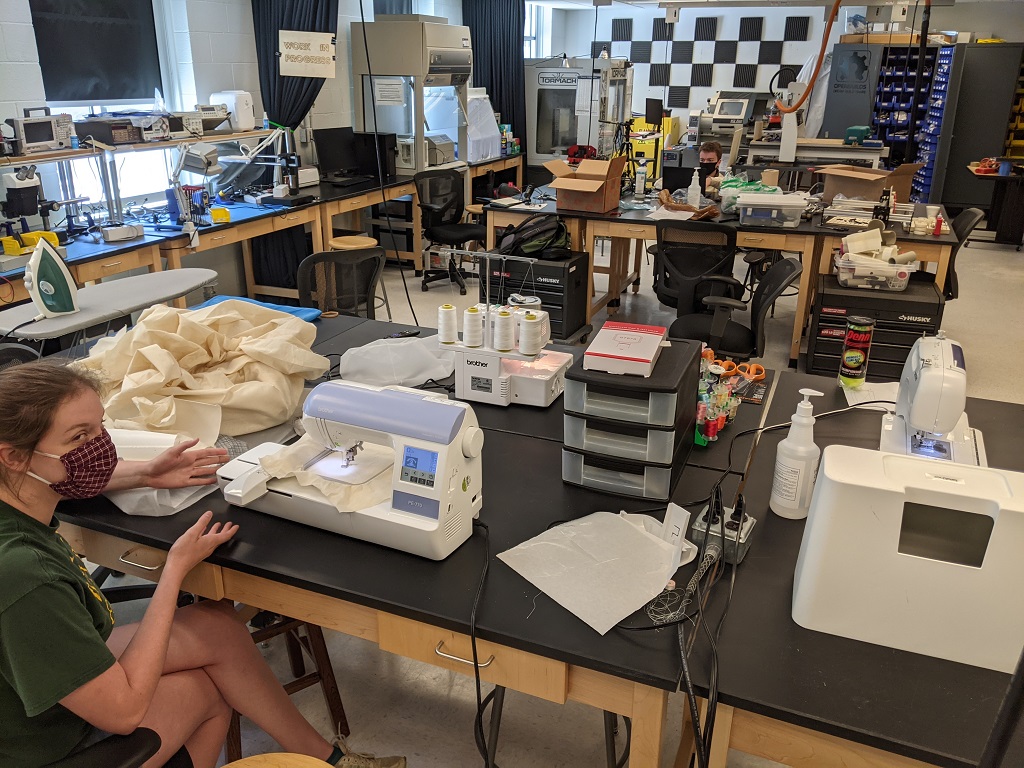
We’ve relocated the sewing equipment that was stashed in the Swem Makerspace to the Small Hall Makerspace Engineering Center for the summer. Come on over and lets make something! 😀
We’re here (albeit at very limited capacity) and are training, learning and building things! Our standard (walk-in) hours are 1-3pm, M-F, in Small Hall 224 (Makerspace Engineering & Applied Design Lab). We’re also ready to help you at most other times, put in a request through our online service desk and we’ll figure out what works for everyone!
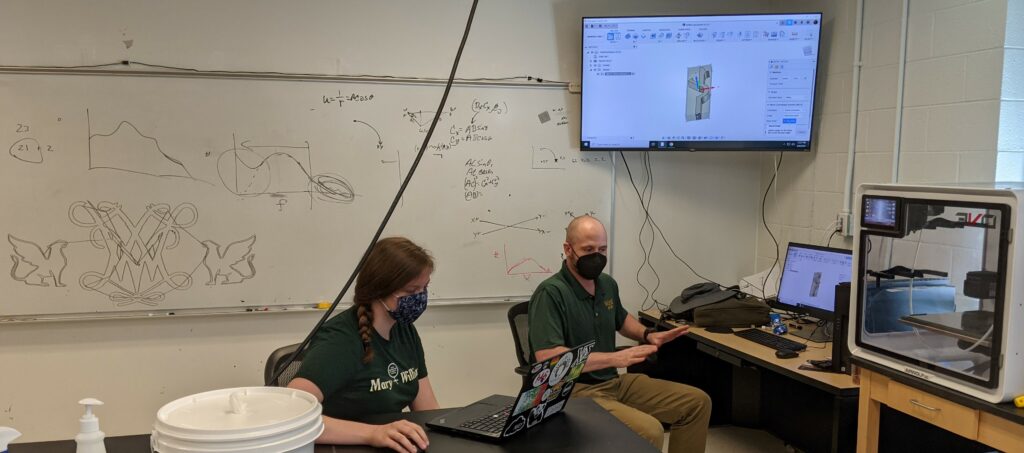
Here we are going over toolpath generation & CNC machining!
One of our great makerspace student engineers just finished building this uke from plywood and 3D printed bits using the Laguna CNC router and Airwolf 3D Evo printers; check it out!
We put together a simple 2-wire CNC robot in the Small Hall Makerspace Center that draws on the whiteboard! This is version 0.2; future versions will have pen retract among other features. This project will be added to the open source projects listing soon.
Here in the Makerspaces, another project that’s in process is the creation of a robotic boat, or more specifically, the creation of swarming autonomous boats (unmanned surface vehicles (USVs) if we’re being real shoes-and-tie fancy like). As both a platform for learning as well as for research; autonomous unmanned surface vehicles are a very relevant technical environment within which our students are working. Swarming USVs will have deep applications in the future ranging from shipping and transportation to deep water exploration and more.
Starting small, our students are focusing on wholly 3D printed USV swarm member prototypes as shown below as we were preparing for a test launch from our Lake Matoaka docks back in January.
Over the past many months the students involved, in particular the Robotics Club, has explored hull design options and coding architectures on our way towards building an effective swarming USV member.
As can be seen these are clearly non-traditional boat hull designs. One of the big reasons that are so strange is that these USVs are based around a unique form of engine, Voith-Schneider propulsion (VSP) systems. VSP systems are quite unique in that they can almost instantaneously point a thrust vector in any cardinal direction. They look and operate similar to a helicopter blade that has been turned vertically and dunked into the water.
Using a simple RC system to test the VSP controlA view at the VSP control fins (surrounded by a protective cage)
If this project sounds of interest to you, let the Makerspaces or the student Robotics Club know and come join the fun. We’ve got all the basic building blocks working and are heading to the Lake for testing.
What’s better than robotics at Lake Matoaka on a nice sunny day?!
An early systems test checking that sensors and actuators are working on the prototype USV-1 design.